What is an AI employee? Definition, examples and a six-question test
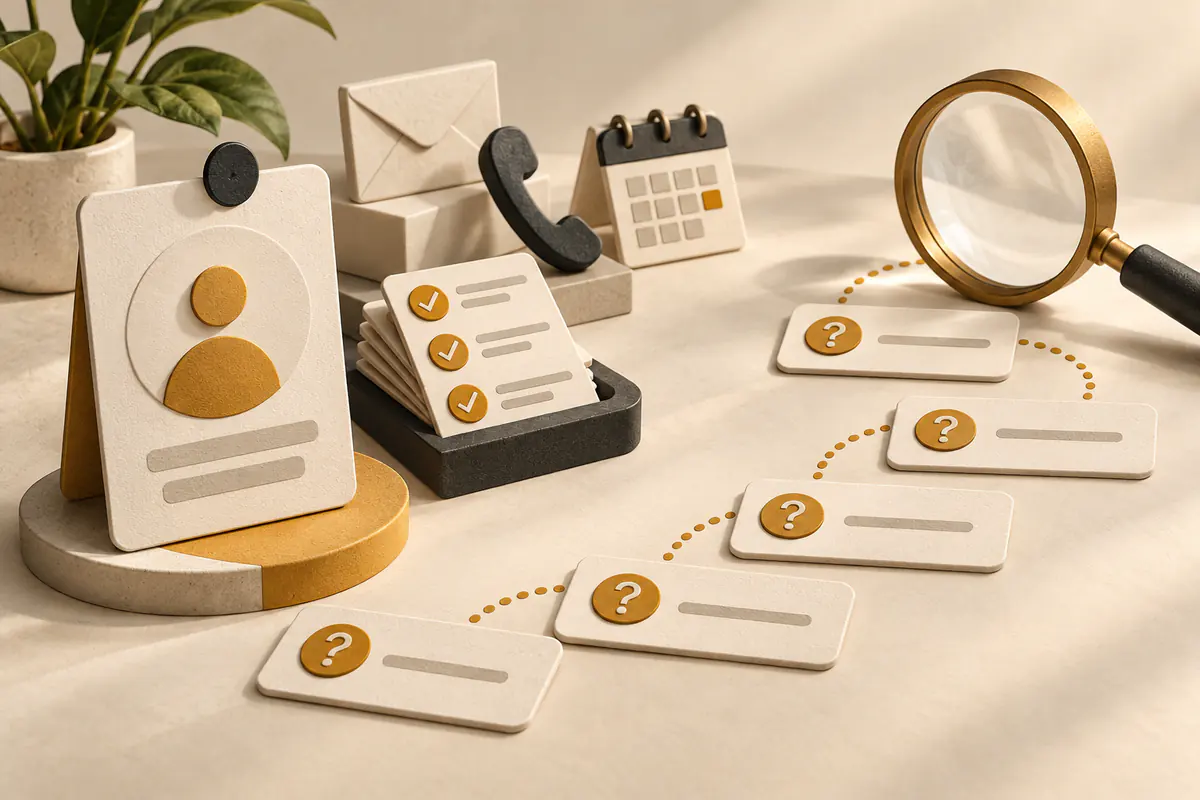
An AI employee is a marketing name for an AI agent packaged with a name, a job title and usually channels like email or phone. It is not a technical category. OpenAssistant is one of the products that fits the idea most closely on its pages, with its own name, phone number, email address and calendar. Vendors use it for things that range from a chat window with a name to an agent that sends email, books meetings and phones people. Others sell almost the same software and call it an assistant, an agent or a “concierge”. This explainer defines the terms in plain words, shows how real vendors use (and avoid) the language, and gives you a six-question test for deciding whether a product deserves the word.
This is not legal advice. Where we mention law, we point to the primary source and say what to ask a lawyer.
The terms in plain words
These are our working definitions, not an industry standard.
| Term | What it does | Who starts the work | What it can touch |
|---|---|---|---|
| Chatbot | Answers questions in a chat window | You, by typing | Only the conversation |
| Assistant or copilot | Helps you inside one app or workflow | You | The app you are in |
| Automation | Follows fixed rules: if this happens, do that | A trigger | Whatever the rules connect |
| AI agent | Uses a model to plan steps and call tools toward a goal | You, a trigger or a schedule | Whatever tools and logins you give it |
| “Digital worker” or “AI employee” | A marketing name for an agent (or a bundle of agents) packaged with a name, a job title and usually channels like email or phone | Varies | Varies |
The last row is the point. “Employee” describes the packaging, not the engineering. Two products can both be agents and one is called an employee and the other is not.
How vendors use the words
All quotes are short and attributed. Everything is.
| Vendor | Employee-style language | What the same pages show |
|---|---|---|
| Artisan | “Artisan builds AI employees for GTM” (llms.txt); “Hire an AI BDR with a whole team behind her” (pricing) | Ava sends outreach and books meetings but “cannot legally make calls” (Artisan). Plans are named Intern and Employee and sold by credits |
| 11x | “digital worker” (Alice pricing) | Its homepage says “agents”; its pages show no “employee” or “hire” language (11x) |
| Fin | “22 reasons to hire Fin” (fin.ai) | The same page calls it a “Customer Agent”. Pricing is per outcome (Fin pricing) |
| Salesforce Agentforce | “digital labor” (Agentforce) | The sales page says its agents work “like an additional user” (Salesforce) |
| Lindy | “Lindy is an AI employee for your whole team” and “Hire Lindy, get it done” (Lindy) | Pricing is a per-seat fee plus a credit pool (Lindy pricing) |
| Sintra | “Hire AI employees today” (Sintra) | The same site says “Every AI worker runs as a chatbot” and that it is designed to support a team, “not replace it” (Sintra) |
| Marblism | “AI employees to scale your business” (Marblism) | One flat plan with 50 hours of AI work a month (Marblism pricing) |
| Eightfold | “Your first digital recruiter” (Eightfold) | “It never decides” (Eightfold) |
| Juicebox | A “sourcing teammate” (Juicebox agents) | Its trust page says it is for the pre-application phase only (Juicebox trust) |
| Microsoft | “Digital workers” appears on an IT blog about Microsoft’s own use, not on the Copilot Studio product page (Microsoft Inside Track) | The product page says “agents” (Copilot Studio) |
| Dust | Avoids it: “AI Operators” (Dust pricing) | Seat-based with monthly credits (Dust pricing) |
| Paradox, Alex, HireVue | Avoid it: an “AI assistant” (Olivia), an “AI recruiter”, “AI agents” (Paradox, Alex, HireVue) | No prices published (Paradox, Alex, HireVue) |
Our own products
OpenAssistant (OA), made by 3Gen, uses employee language heavily on its homepage: “Real employees. Artificial intelligence.”, “AI employees that do real work” and “Like hiring a real assistant” (OpenAssistant). Its staff-badge cards are labelled “AI Employee” with job titles. But the company’s trust page and help center articles say “assistant”, and its about page says “Our goal isn’t to replace people” (OpenAssistant about). Read the homepage wording as marketing, not as a legal or technical status.
Skej, also made by 3Gen, has processed millions of meetings and uses softer language. Its homepage says the assistant works around the clock and “never calls out sick” (Skej). The word “employee” does not appear on its home or pricing pages; it says “assistant”.
Which “employees” are a subscription with a meter?
Look at the pricing pages next to the job titles. Lindy bills every active user and a pool of credits (Lindy pricing). Artie, from the same company as Artisan, says “No seat or AI-employee fees” and sells a shared monthly credit balance (Artie pricing). Marblism meters 50 hours of AI work (Marblism pricing). Sintra gives 250 monthly credits on every plan (Sintra pricing). OA sells per-user plans with monthly credits that do not roll over (OpenAssistant help).
A human employee does not stop when a meter runs out. Lindy says it pauses credit-using actions (Lindy pricing), Artisan says new enrollments pause (Artisan pricing), and OA says it tells you when it cannot finish a task for lack of credits (OA help), all. That does not make them bad. It means a fair description is “software with a credit meter and a job title”, and you should budget accordingly (see our cost worksheet).
Six questions to ask of any product
This is a framework we wrote. It is not a fact about any vendor. Ask it of any product, using the vendor’s documents, not its slogans.
- Identity. Does it have its own name and accounts (email, phone, logins), separate from yours?
- Initiative. Does it work on a schedule or a trigger without you typing a prompt each time?
- Action. Does it take actions inside your systems (send, book, update a record), or only produce text for you to paste?
- Escalation. Does it know when to stop, and does it hand over to a human with the context?
- Accountability. Is there a named human owner and an audit trail of what it did?
- Memory. Does it keep context across days: preferences, past decisions, open tasks?
Our rule of thumb: four or more yeses behaves like a worker, two or fewer is a tool whatever its homepage says, and three is in between. We did not collect memory claims for any vendor, so the table below leaves question 6 out.
How four vendors answer, from their own pages
| 1 Identity | 2 Initiative | 3 Action | 4 Escalation | 5 Owner and audit | |
|---|---|---|---|---|---|
| OA | Own name, phone, email, calendar and secure computer (OA) | Built-in tasks such as Daily Agenda use no credits on paid plans (pricing); in Slack it responds only when invoked (OA help center) | Autonomy set per action type, from Manual to Autonomous (help) | Consequential actions staged for review; account-wide stop (trust) | Audit logs listed under Enterprise (pricing); roles Owner, Admin, Member (help) |
| Lindy | Own phone number; US or Canadian area codes on eligible paid accounts (phone docs) | “Scheduled routines” (pricing) | Configurable write guardrails, shared Slack threads only (integration docs) | Private chats are outside these guardrails | Audit logs on Enterprise (pricing) |
| Artisan (Ava) | Sends in your reps’ names from your domains (pricing) | “Full self-driving Ava” is listed as Soon (pricing) | Multi-channel outreach and booking (Artisan) | “Decide when a human steps in” (Artisan) | “Role-based access & audit log” badge (Artisan); audit logs listed under Enterprise (pricing) |
| Fin | Not covered in our research | Not covered in our research | Procedures can perform multi-step actions and trigger approvals (Fin trust) | Escalates to a human “rather than guessing” (Fin trust) | Not covered in our research |
Read this table as a demonstration of the six questions, not a ranking. Different products target different jobs, and a blank cell means our research did not cover it, not that the feature is missing. Note one pattern: OA, Lindy and Artisan all list audit logs with their Enterprise plans.
What “employee” implies that software does not have
A human employee has legal rights and duties: they can be hired, disciplined and dismissed under employment law, they can be held to a contract, and they can speak for the company in ways the law recognises. Software has none of that. What stays is the business that deploys it.
The primary sources we checked point the same way:
- California’s AB 316 says a defendant who developed, modified or used AI may not assert that the AI autonomously caused the harm; other defenses stay open (California AB 316). Ask a lawyer how it applies to you.
- The FTC’s CAN-SPAM guide says “you can’t contract away your legal responsibility”, and both the advertiser and the company that sends a message can be held responsible (FTC). The guide does not mention AI senders; ask a lawyer how it applies to one.
- 11x’s own documents say the lawful basis for contacting a person on a channel is the customer’s (11x docs).
So, on those sources, an “AI employee” is a tool you are responsible for. For products that give an assistant its own name, email and phone, see our roundup of those assistants. The practical conclusions are in our guides on what to hand to a person and what to hand to the AI and the security questions to ask first.
Quick rules for reading a pitch
- If the pitch says “employee” or “hire”, ask where the seat or credit meter is. Check the pricing page.
- If a product’s own docs say it is a chatbot or an assistant, believe the docs.
- Ask the six questions. Two or fewer yeses is a tool.
- Ask who is accountable when it makes a mistake. The sources above point to you, the deployer.
Related reading
- AI employee vs human hire: which tasks to hand to each
- Best AI assistants with their own name, email and phone in 2026
- Best AI employees of 2026: top picks by job, with prices
- 13 mistakes companies make when hiring AI employees (and 10 demo questions)
Frequently asked questions
What is an AI employee?
It is a marketing name for an AI agent, or a bundle of agents, packaged with a name, a job title and usually channels like email or phone. “Employee” describes the packaging, not the engineering.
What is the difference between a chatbot, an assistant, an automation and an AI agent?
A chatbot answers questions in a chat window. An assistant helps you inside one app. An automation follows fixed rules. An AI agent uses a model to plan steps and call tools toward a goal, with whatever tools and logins you give it.
Is an AI employee a real employee?
No. A human employee has legal rights and duties; software has none. On the primary sources we read, an AI employee is a tool and the business that deploys it stays responsible. This is not legal advice.
How can I tell if a product deserves the word?
Ask six questions: does it have its own identity, does it work on a schedule or trigger, does it take actions in your systems, does it escalate to a human, is there a named owner and audit trail, and does it keep memory across days. Four or more yeses behaves like a worker; two or fewer is a tool.
Try OpenAssistant
To see what a product with its own name, phone number and email address looks like in practice, Try OpenAssistant. It has a free Starter plan, and the paid plans are on the OpenAssistant pricing page.